Which roof actually held up after Hurricane Milton? It's the question we hear from neighbors all over the Treasure Coast, and most of the news coverage never answered it. You've probably heard it both ways over the fence. So what does any of it tell you about the roof you're living under?
Nobody Has a Clean Scoreboard
Here's the honest part. We don't have a tidy statistic that says one material won, and we're not going to make one up. What we can tell you is what we see on real roofs. The roofs that struggle in a big storm are usually the ones with a weak spot: old materials, loose edges, tired flashing, or an install that cut corners. The material matters, but age and workmanship matter just as much. A 25-year-old roof of any type is a different animal than a well-built new one.
Shingle Roof vs Metal Roof in Florida: The Honest Version
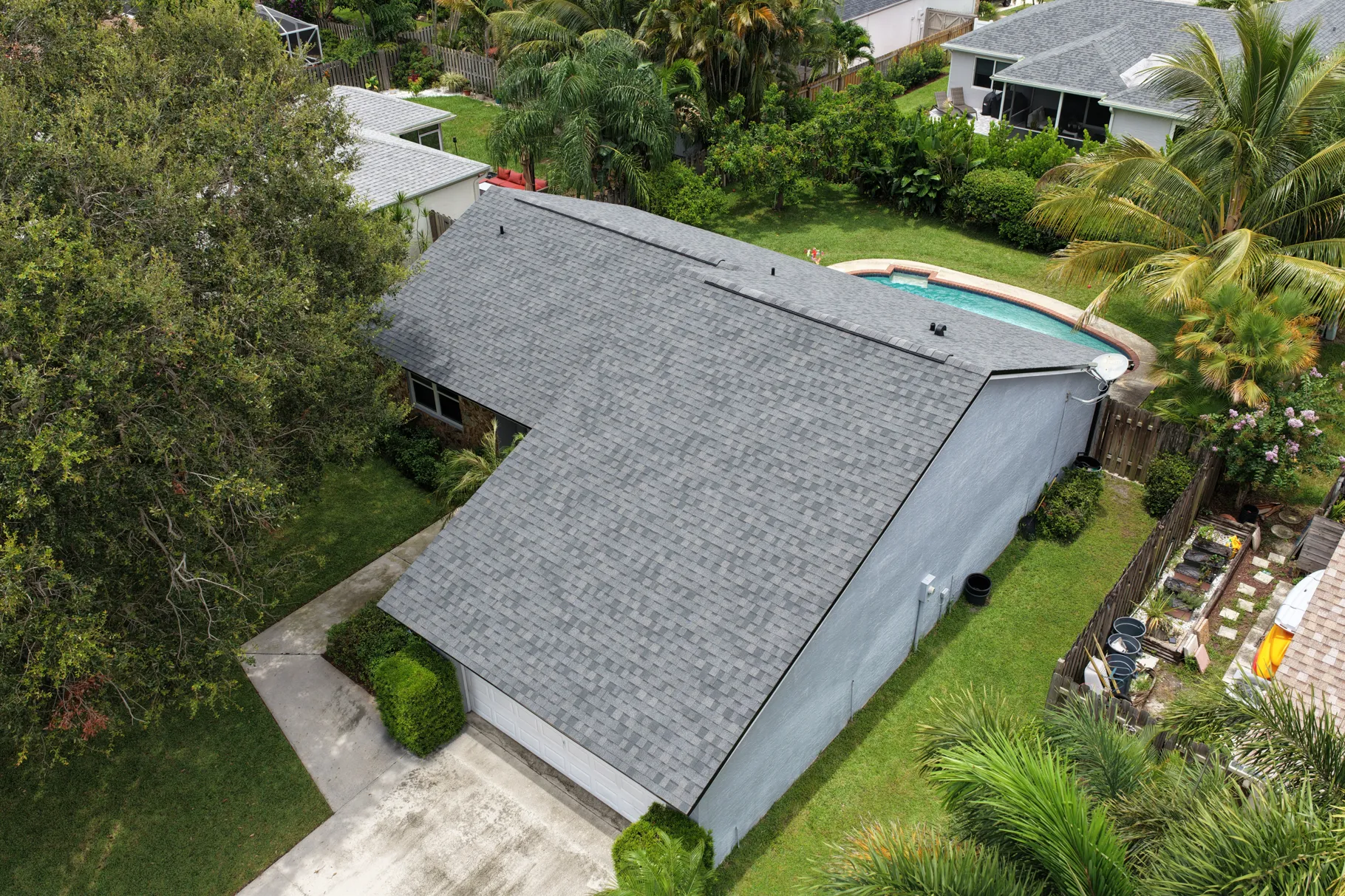
Shingles are the most common roof on the street, and they're the easiest on the budget up front. A newer architectural shingle that's nailed right and sealed down can take a lot of wind. An older 3-tab shingle is another story. After 15 years or so, the sealant strips lose their grip, tabs start to lift, and the next big gust finds them. That age is also right where many homeowners tell us their insurance company starts sending letters. Metal costs more to install, but a properly fastened metal roof sheds wind and rain well, and it doesn't wear out on the same clock. It can dent from flying debris, and every panel profile and fastening method is different, so how it's put on matters a lot. If you're weighing a switch, we'll walk through both with you and tell you what each really costs.
Tile: Tough Surface, Hidden Weak Spot
Barrel tile and concrete tile look great and last a long time. The trouble in a storm is that a loose or cracked tile can become a projectile, and one broken tile can let water in. Here's what many people miss: the tile isn't what keeps your house dry. The underlayment underneath is. On an older tile roof, the tiles can look fine while the layer below has aged out, and that's where the leaks start after a hard rain. Tile can often be repaired, too, so a few damaged tiles don't automatically mean a whole new roof. If someone told you otherwise, read our post on roof tile discontinuation before you sign anything.
What Actually Decides How a Roof Holds Up
Before you pick a material, look at the things that decide the outcome. How old is the roof? How is the deck attached and what condition is the underlayment in? Are the flashing, edges and ridges secure? Was it installed by a crew that stood behind the work? Those questions tell you more than the material name on the quote. We take pictures before, during and after, so you can see what's up there even if you can't climb a ladder yourself. And if you're comparing several quotes, ask each roofer to spell out what's included. No bait-and-switch quotes. No pressure.
Get a Straight Answer About Your Roof
We're a family-run crew, and we'd rather tell you the truth than sell you the wrong roof. If you want to know how yours would hold up, start with a look at what you've got. Get an instant roof quote to see where you stand, or contact us to set up a free inspection. Either way, you'll leave with a clear answer about repair, replacement, and which material actually fits your home.